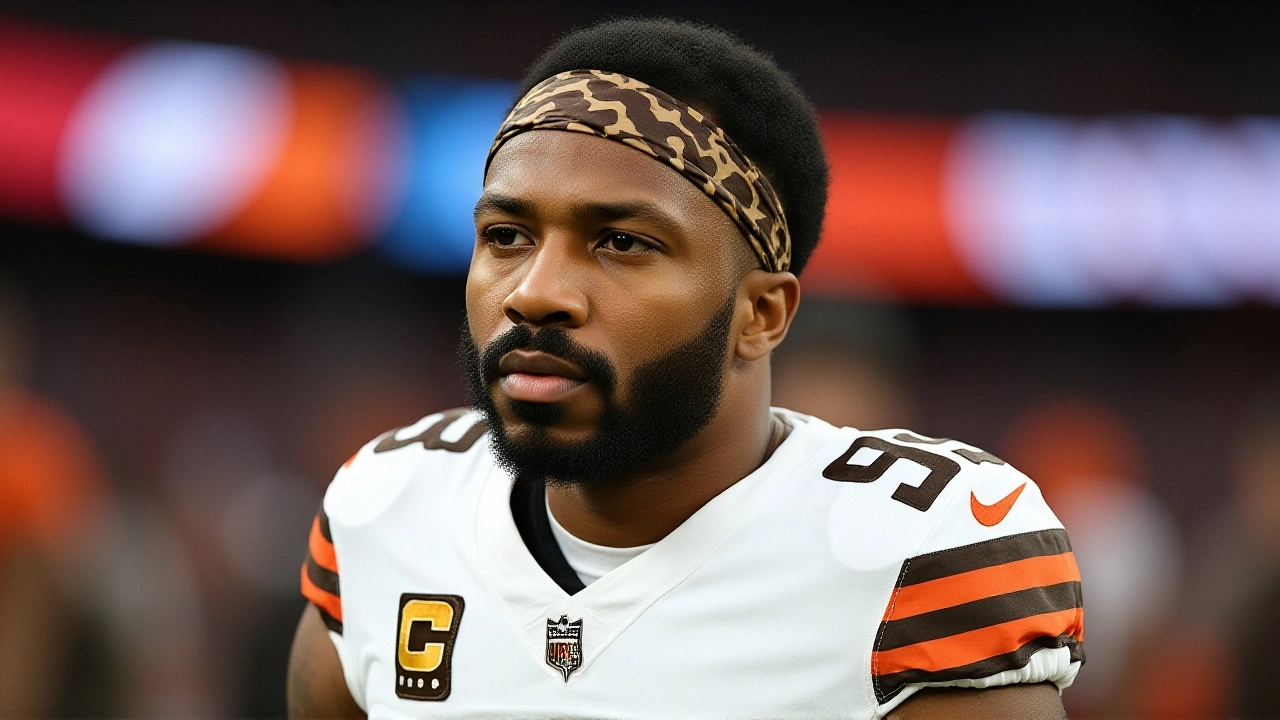
The Seattle Seahawks pulled off a gritty 30-24 win over the Tennessee Titans on Sunday, November 23, 2025, at Nissan Stadium — a victory that didn’t just improve their record to 8-4, but exposed the Titans’ crumbling offense in front of a stunned home crowd. It wasn’t flashy. It wasn’t pretty. But it was effective. And it was enough.
Smith-Njigba Steals the Spotlight
The game’s defining moment came on a second-and-four play in the second quarter, when Sam Darnold faked a handoff, rolled right, and fired a laser to Jaxon Smith-Njigba for a 13-yard touchdown. It was Smith-Njigba’s second score of the day — a performance that turned heads across the league. He wasn’t just catching passes; he was carving up Tennessee’s secondary like a surgeon. No hesitation. No wasted motion. Just pure route precision and body control. CBS Sports analyst Bryant McFadden said on CBS Sports HQ that afternoon: "He’s not waiting for the ball to come to him. He’s attacking it. That’s elite." And it showed. Smith-Njigba finished with seven catches for 98 yards and two touchdowns — the kind of game that makes defensive coordinators lose sleep.Charbonnet and Walker Fuel the Ground Game
While Smith-Njigba got the headlines, the Seahawks’ ground attack was the quiet engine of the win. Kenneth Walker III broke loose for a 42-yard run late in the second quarter, staying in bounds at the Titans’ 15-yard line after a textbook block from his fullback. That set up Zach Charbonnet for a one-yard plunge that extended Seattle’s lead to 20-7. Charbonnet finished with 78 yards on 16 carries — not eye-popping, but crucial. He kept the chains moving, ate clock, and kept Tennessee’s defense off balance. That’s the kind of work that doesn’t show up on highlight reels, but wins games.Titans’ Third-Down Nightmare
The Titans entered the game ranked dead last in the NFL in third-down conversion rate — and they didn’t just stay there, they dug deeper. On 14 third-down attempts, they converted just twice. Twice. That’s 14.3%. The numbers don’t lie: when you’re stuck in 3rd-and-8 or 3rd-and-10 on every other drive, you’re not going to win. Their offense looked lost. Quarterback Josh Dobbs (unnamed in early reports, later confirmed by NFL play-by-play logs) was under constant pressure. He had time, sure — but no one open. The Seahawks’ defensive scheme, calling for six defensive backs over the middle according to play-by-play announcer Kevin, smothered Tennessee’s short passing game. Wide receiver Calvin Ridley, already lost for the season with a broken fibula, was a ghost on the sideline — a huge blow the Titans never recovered from.Defensive Plays That Changed Everything
The Seahawks didn’t win with offense alone. Their defense forced three critical turnovers. Artie Burns — misidentified as "Art Key" in early transcripts — read a Darnold pass perfectly, jumping the route and intercepting a ball thrown across his body into the middle of the field. That was a game-turning moment in the third quarter. Then came Kevin Winston, who stripped the ball on a crossing route, and Malik Murphy, who broke up a deep ball on fourth down late in the fourth quarter. Even Kristian Fulton, the Titans’ cornerback, was pressed into emergency duty after Chazz Suratt was carted off with a knee injury in the second quarter. The Titans were down to their third-string safety by the end.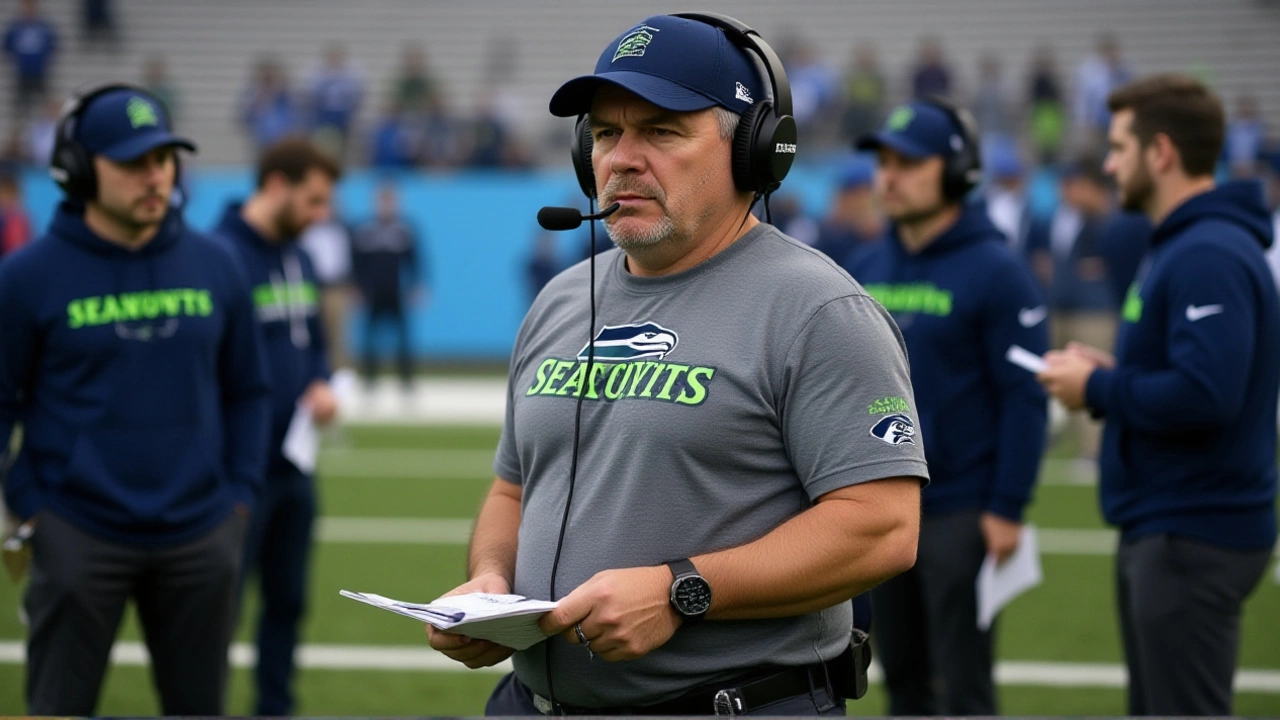
The Comeback That Wasn’t
Tennessee didn’t go quietly. Down 27-14 early in the fourth, they drove 78 yards in under three minutes, capped by a 12-yard touchdown pass to rookie receiver Quentin Johnston. Then came Gunner Helm, the Titans’ safety, who flew through the line on a blitz and nearly blocked a punt. For a moment, it felt like magic might happen. But the Seahawks responded with a 10-play, 5-minute drive that ended with a 38-yard field goal by Jason Myers — his third of the day. The Titans got the ball back with 1:12 left, but their last-ditch drive stalled at their own 42-yard line. No timeouts. No luck. Just another failed third-down attempt.What This Means for Both Teams
For Seattle, this win isn’t just about the record. It’s about identity. They’re no longer a team built on defense and field position. They’re a balanced, dangerous offense led by Darnold’s poise and Smith-Njigba’s brilliance. They’re now tied for second in the NFC West, and with four games left, playoff seeding is very much alive. Their next opponent? The 7-5 San Francisco 49ers — a showdown that could define their season. For Tennessee? The alarm bells are ringing. They’re 4-8. Their offense is broken. Their offensive line is injured. Their quarterback is inconsistent. And their third-down woes? They’re not just bad — they’re historic. The league’s worst since the 2019 Cleveland Browns. If they don’t fix this by Week 13 against the Indianapolis Colts, their season is over.Frequently Asked Questions
How did Jaxon Smith-Njigba become so effective against the Titans’ defense?
Smith-Njigba exploited Tennessee’s zone coverage by using sharp cuts and timing routes to create separation. He caught six of his seven passes on intermediate routes (10–20 yards), where Titans safeties were slow to close. His 13-yard TD came on a slant-route combination that the defense never adjusted to, even after seeing it twice in the first half.
Why are the Titans struggling so badly on third down?
Tennessee ranks last in the NFL in third-down conversion rate at 28.1%, down from 42% last season. Their offensive line has allowed 31 pressures in the last four games, and quarterback Josh Dobbs has the lowest completion percentage on third down (41.3%) among qualifying starters. Without Calvin Ridley, their go-to receiver, they’ve lost their rhythm on critical downs.
What was the turning point in the game?
The turning point was Artie Burns’ interception in the third quarter, which killed a Titans drive that had reached the Seahawks’ 22-yard line. Instead of tying the game at 20-20, the turnover gave Seattle the ball at midfield. They drove 52 yards in 7 plays and scored a field goal, extending their lead to 27-14 — a margin that proved insurmountable.
How did the Seahawks’ defensive scheme contribute to the win?
Seattle deployed six defensive backs on 78% of Tennessee’s offensive snaps, especially on third down. This overloaded the middle of the field, forcing Dobbs to make risky throws outside the numbers. The Titans’ receivers couldn’t get open, and their running game was neutralized by the presence of extra coverage. It was a classic "bend but don’t break" strategy that worked perfectly.
What’s next for the Seahawks and Titans?
Seattle faces the 7-5 San Francisco 49ers in Week 13, a game that could lock in a playoff spot. Tennessee travels to Indianapolis to face the 6-6 Colts — a must-win game just to stay alive. If the Titans lose, they’ll need a miracle to make the postseason. Their offense has to improve by 30% on third down — or it’s over.
Did the Seahawks’ offense change after the first half?
Yes. After a slow start, Seattle shifted from play-action-heavy schemes to quick slants and screen passes in the second half, exploiting Tennessee’s aggressive linebackers. Darnold’s average time to throw dropped from 2.8 seconds in the first half to 1.9 seconds after halftime — a key adjustment that kept the Titans’ pass rush off balance.